Showing posts with label MUSIC. Show all posts
Showing posts with label MUSIC. Show all posts
Monday, 27 May 2019

Sunday, 28 April 2019
Project Physical Education-Music 2ºA / 2ºB
Waka Waka (This is Africa), is a song performed by the Colombian singer Shakira, with the collaboration of the South African group Freshlyground.
It was chosen by FIFA as the official song of the 2010 FIFA World Cup held that year in South Africa. All the profits generated by the song went to the charity campaign of the FIFA 20 Centers for 2010.
Waka Waka combines Afro-Colombian rhythms and instrumentation with society, Trinidad and Tobago musical genre derived from calypso.
The chorus was based on a song from Cameroon called "Zangalewa" that made popular the Golden Sounds group formed by ex-military of that country. The group maintained that they did not compose, but adopted a popular song spontaneously on the part of African scouts when they marched.
The song was number 1 in 50 countries.
Colombia, Guatemala, Italy, Luxembourg, Spain, Portugal, Germany, France, Chile, Mexico, Turkey, Belgium, Austria, Switzerland, Holland, Denmark and Finland, fact that what had matched other songs of other world-class singers such as Madonna, Michael Jackson or Britney Spears with "Hung Up", "Thriller" and "... Baby One More Time", respectively.
In addition, he was the official official of World Football.
The song was released on April 28, 2010, and was available for digital download from May 11. The single had sold more than 9.5 million copies worldwide, and became the most successful of the digital era, since all sales were in that format. It was included in the album Listen Up! The Official 2010 FIFA World Cup Album, the official record of the World Cup. All the profits derived from the sale of the album would go to the charity campaign of the FIFA 20 Centers for 2010, whose goal was to achieve a positive social change through football, to build twenty centers «Football for Hope» along all of Africa to solve the problems of health and education on the continent.
Another campaign focused on education, co-founded by Queen Rania of Jordan and FIFA President Joseph S. Blatter, was 1GOAL Education for All. Shakira acted as an ambassador to add her voice to this initiative of the World Cup. Supported by some of the biggest names in the global soccer community and the FIFA board, the singer ensured with this campaign that the world leaders donated the funds necessary for some seventy-two million children to have access to education. Worldwide.
On April 23, auditions were held in Los Angeles to choose the dancers and models for the official video of the song. The video was shot in Compton, United States, an area populated mostly by African-Americans and Latinos.
On May 2, the first image was released. In the videoclip appeared the players Lionel Messi, Dani Alves, Rafael Márquez Álvarez, Gerard Piqué and Carlos Kameni.
Shakira performed live the English version of the song in Soweto, (Johannesburg) on June 10, 2010, for the opening concert of the 2010 World Cup. It was watched live by approximately 700 million viewers from all over the world. world, when it had already been thought that the song would be performed only in the final of that Cup on July 11, 2010. Additionally, the song was also performed again at the close of the World Cup. Shakira was the only artist who performed at both ceremonies.
Origin
Zangalewa is a Cameroonian song.1 It receives the name of the first words of the song: Zamina mine Zangalewa.
The refrain has been used by different artists as part of their songs, among which: Golden Sounds, Las chicas del Can and Shakira stand out.
It was part of the repertoire of the soldiers, but also of various young groups such as scouts, all over Africa. It is a song of light rhythm, and is frequently used as a song for marches.
It was popularized in 1986 by the Cameroonian band Golden Sounds, which gave it great success and changed its name to Zangalewa.
It is also said that the meaning "Waka-waka" was a greeting made by soldiers from Cameroon during the Second World War.
This song is performed in the Fang language, corresponding to certain areas of Gabon, southern Cameroon, Equatorial Guinea and a little east of Central Africa. Being so popular leads to many times the song is sung without knowing the meaning.
Za engalomwa means in Fang language "Who sent you?" This is the question of a Cameroonian soldier to another of foreign origin, According to Guy Dooh, of the Zangaléwa group. The term "zangalewa" can also come from an expression in Ewondo: za anga loé wa ?, which would be "who called you?" Cameroon is a multi-ethnic and plurilingual country, and not all soldiers knew how to speak Ewondo, so it is very likely that over time the term za anga loé wa became the Zangalewa that we know today.
In 2010 Shakira repeats it in the chorus with the title Waka Waka (This Time for Africa) with the South African group Freshlyground becoming the official song of the World Cup South Africa 2010.
The 2010 FIFA World Cup South Africa was the 19th edition of the Football World Cup. The competition was held in South Africa, between June 11 and July 11 of that year, the first time the tournament was held in Africa and the fifth time it was held in the Southern Hemisphere.
They registered to participate in the ranking process 204 of the 208 national associations affiliated to FIFA, held between mid-2007 and the end of 2009, in order to determine the 31 participating teams in the final phase of the tournament (which would join the host South Africa).
The championship was composed of two phases: in the first, eight groups of four teams were formed each, advancing to the next round the two best of each group. The sixteen qualifiers then met in elimination matches, until they reached the two teams that played the final at the Soccer City Stadium in Johannesburg.
Before the tournament, South Africa made a millionaire investment to be able to receive one of the most important sporting events on the planet. About 2 million tickets were put on sale to attend the 64 games, to be played in 10 stadiums located throughout the country, of which half were new. In preparation for the event, the host country previously organized the 2009 FIFA Confederations Cup in the cities of Port Elizabeth, Bloemfontein, Johannesburg, Pretoria and Rustenburg.
After the consecration of Spain to the Netherlands, this World Cup was the first played outside Europe in which a team from that continent was proclaimed champion, and it was the first time since 1998 that he won a team without previous world cups in his winners, as well as the first time since 1978 when two teams without world cups met in the finals. As world champions, Spain participated in the 2013 FIFA Confederations Cup.

Wednesday, 17 April 2019
N.Self-Assessment (Second term)
1.-What can I do that I couldn't do before?
Play with the flute ``Santa Maria Strela do día´´.
2.-What do I like most?
Make rhythms.
3.-What do I do well?
Make rhythms.
4.-What am I confused about?
I think I don´t confused in anything.
5.-What do I need help with?
I think I don't need help.
6.-What do I do in English and/or music outside the class?
I watch films.
7.-What do I need to improve?
I need to improve.
8.-What did I learn about culture?
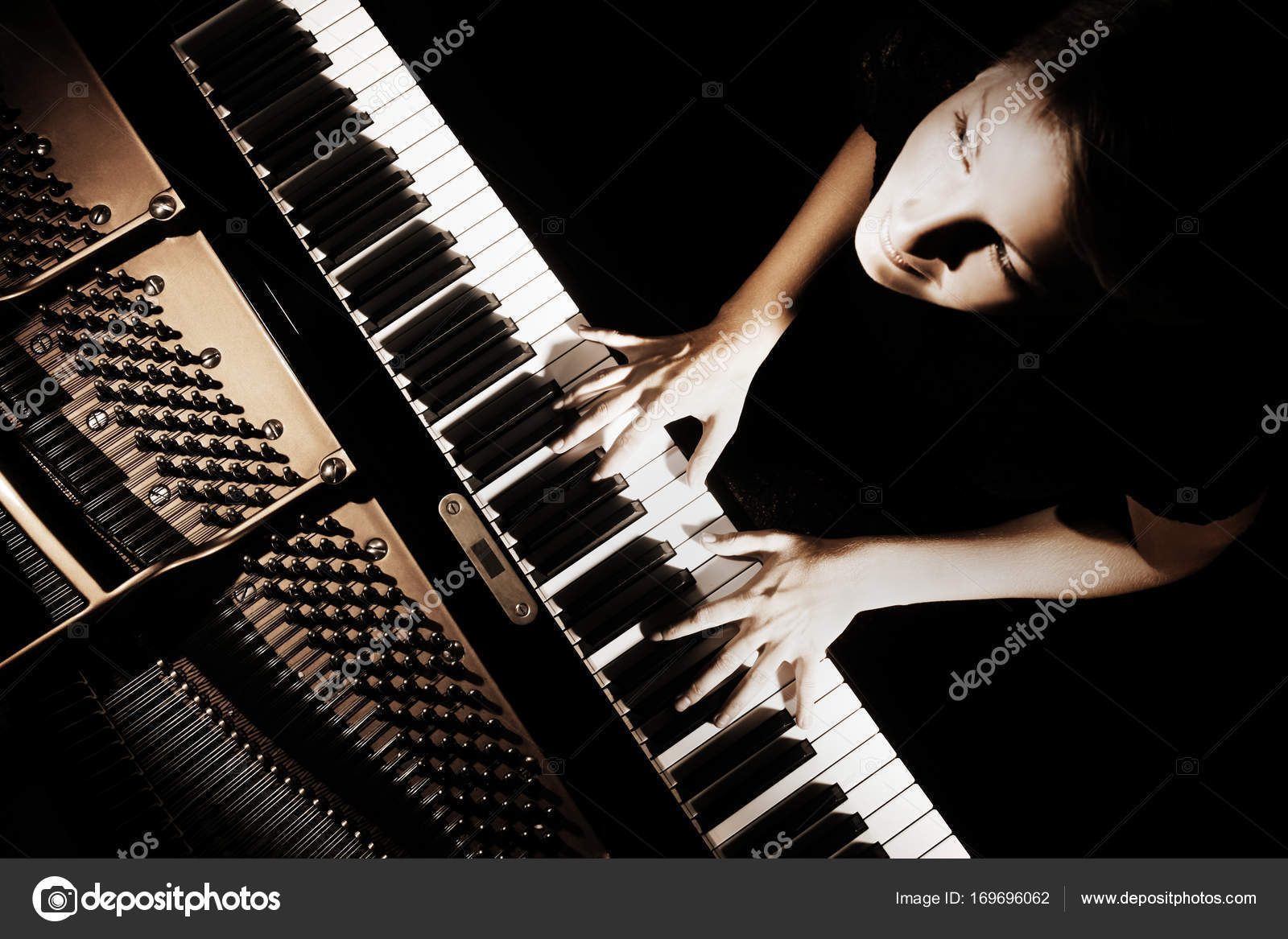
I learnt about the Piano.
Monday, 11 March 2019
H. Project III
1) What period does the Middle Ages cover?
Between the V and the XV. It began with the fall of the Roman Empire in 476 and ended with the discovery of America in 1492
2) What general characteristics does it have (according to the teachers' comments)?
3)What is the main difference between ``troubadours´´and ``minstrels´´?
The minstrels, on the contrary, their profession consisted only of entertaining people. They had many talents among them singing, dancing, reciting poems, juggling, hand games, word games and quick answers to earn money.
4) Pay attention to these two monuments (a Romantic church and a Gothic cathedral).What do their different heights have in common with the music evolution of those centuries?
5) What do you feel looking at these pictures (taken from the 19th century but directly linked to the Middle Ages)? In your own opinion, what kind of music could accompany these images?
When I see these photos I feel harmony, peace, relaxation ...
Between the V and the XV. It began with the fall of the Roman Empire in 476 and ended with the discovery of America in 1492
2) What general characteristics does it have (according to the teachers' comments)?
· They were dedicated to agriculture and livestock. The society was very rural.
· The social classes were:
o Privileged (kings, nobles and clergy)
o Not privileged (Artisans and peasants)
· The Catholic Church had a lot of influence in Middle Ages
· Crusades or holy wars were developed to conquer lands.
· Romanesque art is an artistic style created within workshops and emerged in the eleventh and twelfth centuries, in Europe.
· Gothic art prevailed in the sixteenth century when the barbarians invaded the Roman Empire. It was characterized by the creation of the vaults of crossed arches, broken arches, stained glass windows.
A troubadour was that person of high birth who was dedicated to compose, translate and interpret his works with a didactic and entertainment purpose rather than as a way to make a living. Being educated people, with extensive training in the trívium (grammar, logic and rhetoric) and the quadrivium (arithmetic, geometry, music and astronomy), easily accessed the major European courts and were consulted on politics, literature or recent events.
4) Pay attention to these two monuments (a Romantic church and a Gothic cathedral).What do their different heights have in common with the music evolution of those centuries?
Gothic art results from the evolution of Romanesque art, however we observe different and even opposite attitudes. If the Romanesque is recollection, darkness and solidity; in Gothic there is light, color and elevation to the divine.
When I see these photos I feel harmony, peace, relaxation ...
In the first photo, the music that should accompany it is Celtic music, with rhythms that contrast with cheerful music that can even sound like melodies of war, even sad and peaceful.
In the second one, music that recalls the sound of nature: birds, crickets, frogs, wind, water ...
In the third one, it would be romantic music accompanied by instruments such as the harp, the flute, the violin...It may show little concern for the external form and greater by inspiration and expressive force. Melodic style of great richness, with a passionate and intense melody and a warm expression of feelings.
6)Why does Heavy Metal music love this aesthetic?
This type of music is related to the Middle Ages, wars, knights, castles, cavalry, wrestling ... It is common to find covers of music albums that are more reminiscent of a comic by Conan the barbarian. Theatrical staging and costumes more typical of medieval warriors with epic character letters. Musicians are seen as authentic warriors of legends who tell stories of distant or unreal times in which the listener flees from the monotony and rationality of today's life.
Tuesday, 5 March 2019
Thursday, 10 January 2019
G. Self-Assessment (First Term)
1.-What can I do that I couldn't do before?
Now a can differentiate wat it is a flat and a sharp
2.-What I do like most?
I like watch videos
3.-What do I do well?
I do well search information about music topics
4.-What am I confused about?
I didn´t confunse in nothing
5.-What do I need help with?
I need help with the pronunciation
6.-What do I do in English and /or music outside the class?
I watch films in English.
7.-What do I need to improve?
I need to improve playing the recorder
8.-What did I learn about culture?
I learn about Bob Dylan
Friday, 23 November 2018
`Blowin´in the wind
BLOWING IN THE WIND
The bullets lost in the far west
And it hits people cry.
How many fish are die in the sea?
Pretending say something to,
How many times can you get to the top?
Before falling so many times.
How many seas they have to disappear?
Before they exist in the sky,
How many hours they have to spend?
After losing his life.
How many dreams do I have to have?
To be able to fly high.
Wednesday, 14 November 2018
E. Project II
- How would you describe the ``program music´´? (2 or 3 lines are enough).
Programmatic music is one that is conceived to express ideas or images beyond music, for example, a trip, a landscape or a battle. Its differs from absolute or pure music or one that explores aesthetics from the sonorous and musical.The rule is the convergence of the arts and motivation outside of music. Programmatic music is always instrumental. This acquires popularity in 19th century with Romanticism.

- Choose one of the next examples (worked alredy a bit in Music classes) and do some research about the composer (4 or 5 lines are enough).
Antonio Lucio Vivaldi was a violinist and a composer, businessman and Catholic priest. He was born in Venice (Italy) on the 4th of March 1678 and he died on the 28th of July 1741.He was called the red priest.He composed more than 770 works , approximately 400 concerts (in which he had reflected his mastery) and 46 operas.He is known for being the author of violin concert series and The Four Seasons.
-This is the musical piece we are playing in the class. Do you believe the composer transmits the little meaning in a good manner? Why?
Because it has a calm and smooth rhythm. As it progresses , the melody increases the volume and it's faster, simulating the dawn and the beginning of the day.
Programmatic music is one that is conceived to express ideas or images beyond music, for example, a trip, a landscape or a battle. Its differs from absolute or pure music or one that explores aesthetics from the sonorous and musical.The rule is the convergence of the arts and motivation outside of music. Programmatic music is always instrumental. This acquires popularity in 19th century with Romanticism.

Antonio Lucio Vivaldi was a violinist and a composer, businessman and Catholic priest. He was born in Venice (Italy) on the 4th of March 1678 and he died on the 28th of July 1741.He was called the red priest.He composed more than 770 works , approximately 400 concerts (in which he had reflected his mastery) and 46 operas.He is known for being the author of violin concert series and The Four Seasons.
Because it has a calm and smooth rhythm. As it progresses , the melody increases the volume and it's faster, simulating the dawn and the beginning of the day.
Tuesday, 13 November 2018
D. Project I
-Which one do you prefer ? Why? (2 or 3 lines are enough).
2)
-Who was Bob Dylan? (2 or 3 lines are enough).
Bob Dylan is an American singer , musician and composer. He was born in Minnesota (E.E.U.U), on 24th of May 1941. His real name is Robert Allez Zimmerman. He has six children. He is an important figure in popular music of the 20th century and the beginning of the 21st century. Much of his work was in the 1960s. The most important songs are ``Blowin ´ in the wind´´and ``A hard Rain´s a-Gonna Fall´´.
``Blowin´ in the wind´´

I like the first song because it is slow and I like the rhythm, I don't like the second song because two voices sing, one higher than the other voice and I don't like the third song because the last stanza is very fast unlike the other stanzas of the song.
1)
3)
-Who was Bob Dylan? (2 or 3 lines are enough).
Bob Dylan is an American singer , musician and composer. He was born in Minnesota (E.E.U.U), on 24th of May 1941. His real name is Robert Allez Zimmerman. He has six children. He is an important figure in popular music of the 20th century and the beginning of the 21st century. Much of his work was in the 1960s. The most important songs are ``Blowin ´ in the wind´´and ``A hard Rain´s a-Gonna Fall´´.
``Blowin´ in the wind´´
``A Hard Rain´s a-Gonna Fall´´
-In Music classes I have told you about the sixties and the music of that period, including some videos. If you paid attention, you will be capable of writing down a summary. (4 or 5 lines are enough)
In the sixties in America they wore rather strange clothes.Women and Afro-Americans began to fight for their rights. There was a counter-cultural, pacifist movement that was the hippies, the V was invented which means victory or peace. Hippies had a reputation for taking drugs (marijuana, LSD...) and they used to wear colourful, flowery clothes, paint using very colorful colors .There was a war ( the Korean war) between Russia and the United States. The USA supported South Korea and Russia supported North Korea. Some famous groups were: the Beatles, the Rolling Stones, the Mamas & the Papas, Jimmy Hendrix.

Sunday, 4 November 2018
A.To begin with...(part I)
Does sadness or melancholy belong to music? Or must always make you feel happy or glad?
No, the music bisides to like us feel in many ways :sad, happy, angry...It will depend on what the author wants to convey to us and how he make us feel.
No, the music bisides to like us feel in many ways :sad, happy, angry...It will depend on what the author wants to convey to us and how he make us feel.
Subscribe to:
Posts (Atom)