
Wednesday, 20 June 2018
Self-Assessment 3
I can use the superlative and comparative adjetives than I couldn't do use than before.Now I can write a big paragraph and I can understand most of the readings and listenings.I can make a dialogue with all the vocabulary I learnt .I can use the most of the vocabulary and grammar I studied but I need improved the translation. My favourite work was the street artist .Now I can pronounce much better now because Mickel the lenguaje assistant


Sunday, 10 June 2018
Equestrian Sport
Equestrian Sport
Equetrian is more than
a sport, it helps us tone muscles, maintain correct posture and is a good
cardiovascular exercise. In addition, it is ideal to clear the mind with great
psychological benefits. You could say that horse riding is the most complete
sport that exists next to swimming. It helps us tone muscles like the
abdominals, buttocks, legs or back. In addition, the rider improves his
balance, posture and mobility. When a person practices riding, he maintains a
good body posture and this avoids possible injuries in the future.
It is one of the most traditional Olympic sports, with participation in almost all editions
of the Olympic Games. At the moment three equestrian disciplines are part of the Olympic Games:
training, equestrian jump and complete competition.In the three they participate individually and by teams.
It is the only sport in which men and women compete together.
The Spanish medalists are four: one gold, two silvers and one bronze.
· José Navarro, José Álvarez and Julio García with gold in jumps by teams in Amsterdam 1928.
· Jaime García, José Navarro and Marcelino Gavilán with silver in jumps by teams London 1948.
· Beatriz Ferrer-Salat with bronze in taming Athens 2004.
· Beatriz Ferrer-Salat, Rafael Soto and Juan Antonio Jiménez
with silver in dressage by teams Athens 2004.
The Spanish participants in the Olympic Games at Rio 2016 were:
· Borja Carrascosa in Doma
· Eduardo Álvarez in Saltos
· Albert Hermoso in full competition
· José Daniel Martín in Doma
· Manuel Fernández in Saltos
· Sergio Álvarez in Saltos
· Severo Jurado in Saltos


Monday, 4 June 2018
New Vocabulary (U.7)
- Ginger:
- he has got red hair.
- hoodie:
- it is a jacket with a hood.
- top:
- it is the part of the top in the clothes.
- baggy:
- it is a big trousers.
- discover:
- it is find something.
New Vocabulary (U.6)
- Canvas:
- Cloth ready to paint on it.
- Spicy:
- That has a heat flavor.
- Tasty:
- That has an intense and pleasant flavor.
- Chickpeas:
- Seed of this plant, edible, of small size, rounded shape, with a bent apex and yellowish color.
- Purse:
- Portfolio with departments to carry loose currency and bills.
- Chewing gum:
- Jelly that is chewed and not swallowed.
Description of a famous person
Marco Asensio
He is tall, well-built and thin .He has got short, straight dark hair. He has got big , brown eyes.He has got small ears and a small nose. He has got a beard.he is a football player in Real Madrid team.He is wearing a red jacket of Spanish football team.Sunday, 6 May 2018


Monday, 30 April 2018
Egg Tempera
Egg tempera is known for its linear qualities and
capacity to produce jewel-like paintings.
After, its peak during the Renaissance, egg tempera fell
out of favor with the rise of the more versatile oil paints. However, a few
modern painters have embraced the medium, adopting the labor-intensive practice
of creating both the paints and the panels.
Egg tempera is a classic painting technique, tracing back
to antiquity. Egg tempera is composed of ground pigment, water, and egg yolk. With the egg yolk the dimensionality is achieved.
What is Egg Tempera?
Egg tempera is composed of egg yolk, powdered pigment,
and distilled water. The egg yolk serves as the binder that holds the pigment
together. The addition of water turns the paint into a usable paste-like form.
Although egg tempera can be purchased commercially, most
egg tempera artists prefer the purity of creating their own paints. It is a
relatively easy process. However, homemade egg tempera can only be used for a
single painting session.
Steps to create your own egg tempera paints:
A. Roll
the separated egg yolk on a paper towel.
B.
Break the yolk sac with a pin.
C.
Mix the contents of the yolk sac with ½ -1 tsp. of
water and stir.
D.
Add water to the dry pigment to create a creamy
paste. Add a drop of denatured alcohol to disperse the pigment
E.
The pigment is now a paste
F.
Add an equal
amount of egg yolk to the pigment paste.
It is important to use only the egg yolk, minus the sac
and egg white. Albumen, the protein found in egg white, prevents the paint from
adhering well to the panel surface.
The goal when mixing egg tempera is to add just the right
amount of egg yolk. When the right amount is used, the paint will dry to a
slightly glossy finish. Too much egg yolk will make the paint appear greasy,
and too little will make the paint appear chalky.
Egg Tempera Supplies:

· Dry pigments
· Drafting tape
· Measuring spoons
· Soft-hair brushes
· Wáter
· Mixing cups
· Gesseoed panels
· egg
· palette knife
· sponge
· fine sandpaper
· India ink
· a gesso mixture
· a pencil
· a couple of clean jars for water
· a roll of paper towels
Preparing the Support
Before painting, a wooden support is prepared. The
support must be absorbent so that the egg tempera can properly adhere to the
surface.
The artist first creates a rabbit skin glue. Rabbit skin
or hide gelatin is mixed with water, allowed to sit overnight, then slowly
heated. The heated glue is then applied thinly to the front, back and sides of
the panel and allowed to dry for 24 hours.
The next step is to apply a heated gesso mixture. To make
the gesso mixture, precipitated chalk, whiting, and titanium white are mixed
together with the rabbit skin glue water, which serves as an aqueous binder.
An artist can take a shortcut by using a product such as Fredrix Dry Gesso
Mix,” in which the ingredients are already pre-mixed, and the artist only needs
to add water.
The mixture is gently heated until the gesso has a
cream-like texture. Four to six coats are applied and then the panel is allowed
to dry for another 24 hours. Once dry, the panel can be sanded.
Transferring the Image
Many artists draw directly on their panels, while others
transfer their images onto panels using graphite paper or tracing paper. The
first step is to draw a light sketch.
Adding Values
Five different values from light to dark are created by
adding one drop of India ink into a mixing cup, adding two drops in another
cup, and so forth, each time adding more drops into a new receptacle until five
drops are added. The darkest ink mixtures are reserved for the darkest values
in the underlying pencil drawing
Applying the Paint
The first applications of paint on the inked surface are applied thinly and
loosely. Egg tempera dries very quickly, so the painting must be worked section
by section. To create the underpainting, the darker areas are first blocked in.
The lighter the color, the more opaque it will appear.
Blending with egg tempera is not achieved in the same
manner as oil or acrylic painting. The paint values must be “blended” by
overlays of linear strokes. To create a sense of depth, warm colors can be
glazed over cool colors and cool colors can be glazed over warm colors.
Steps for painting petals:
A. Draw with a 8H pencil on gesso.
B. Ink over the drawing in corresponding values.
C. Apply thin glazes of ultramarine blue and vermillion, plus black in dark
areas.
D. Applying different gradations of cadmium yellow, yellow ochre, and white.
E. Add darker lines of violet and vermillion to form curve of the petal, and
white to highlight the base and sides of the petal.
Painting with Egg Tempera
With egg tempera painting, small strokes of thinned color
are applied almost in the manner that one handles a colored pencil. When
thinning the tempered paint with more wáter. It is important to wipe the excess
pigment on the brush. Egg tempera is never applied heavily, as that would cause
the paint to crack and flake off.
Glazing
& Opacity
Glazing is one of the techniques used when painting with
egg tempera. To create a glaze, thin, broad strokes of color are placed on top
of another color. The resulting effect is similar to that of watercolors and
creates a jewel-like appearance.
Through various techniques, egg tempera can achieve
opacity, translucency, and opalescence. To create translucency, a dark glaze is
applied over a lighter color or value. Opalescence is produced by placing a
lighter color over a darker one.
Masking
In this painting, a tracing
paper mask was used to protect the foreground flower arrangement in the vase,
as well as the tablecloth. The darker colors in the background were laid in
thinly and broadly with a hake brush. Later, smaller strokes of white with
yellow ochre were applied to bring up the lighter color and value.
Lights and Darks
Egg tempera dries quickly, making it difficult to blend
edges. The different values of color must be mixed and applied near or on top
of one another to create transitions in hue or value. The edges of different
values can be “blended” by glazing or using linear strokes of color over an
edge. Fine details can be added with a liner brush or brush sizes (0 -1). The
fine lines can help delineate an object and also create areas of light values.
Finishing an
Egg Tempera Painting
Egg tempera paintings take approximately six months to
one year to dry completely. Egg tempera paintings are usually not varnished.
Varnish would drastically alter the appearance of the tempera painting. Some
tempera painters frame their paintings by placing them under glass.
Saturday, 28 April 2018
Cadmiun yellow / red

One picture with this pigment is The Red Studio of Henri Matisse Matisse was much taken with this strong new red, which has excellent stability.
This pigment was born in 1970 and we use them for many things.
One picture with this pigment is The Red Studio of Henri Matisse Matisse was much taken with this strong new red, which has excellent stability.
This pigment was born in 1970 and we use them for many things.
Friday, 27 April 2018
Soccer sport
- Shot to the crosshead
- tiro a la cruzeta
- kick off
- saque inicial
- flag
- banderín
- scorpion:
- Escorpión
- own goal:
- gol en propia
- top scorer :
- pichichi
- punk
- despeje
- comb the ball:
- peinar la pelota
- wall
- barrera


Tuesday, 24 April 2018
My favourite food
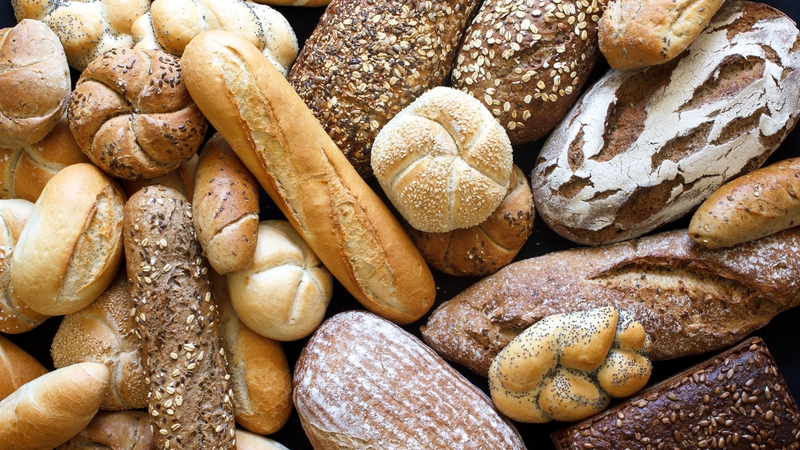
I really love bread. My favourite type of bread is oil bread. With the bread I do sandwich, toast... I eat 5 times a week for lunch. It is good foor me becouse it has carbohydrates.
Subscribe to:
Posts (Atom)